By Kadijatu Bangura, Staff Reporter
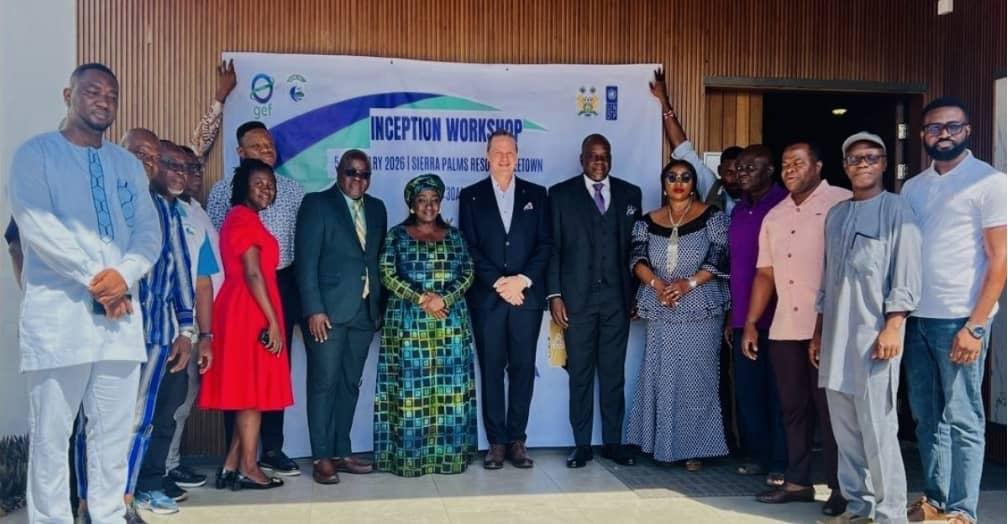
The United Nations Development Programme (UNDP), in collaboration with the Government of Sierra Leone, has launched two transformative initiatives aimed at overhauling the country’s waste management systems and promoting a circular economy. The projects “Shifting to Zero Waste Against Pollution” (SWAP) and “Youth for Circularity 2030” were unveiled on February 5, 2026, at the Sierra Palms Resort in Freetown.
Tanzila Watta Sankoh, Team Lead for PC5D&R at UNDP Sierra Leone, announced that the SWAP project is a six-year initiative funded by the Global Environment Facility (GEF), boasting a budget of $5.4 million. Key partners in this effort include the Environmental Protection Agency (EPA-SL) and the Freetown City Council. Sankoh also revealed that the UNDP has secured funding from Samsung to pilot an electronic waste (e-waste) collection program, marking a landmark collaboration that could pave the way for future resource mobilization.
“Poor waste management has polluted land and waterways, obstructed drainage systems, and heightened public health risks,” warned Petrini, stressing the urgency of the initiatives given the critical issues at major dumping sites like Granville Brook and Kingtom. The SWAP project is part of a larger $28 million global effort being implemented in five pilot cities worldwide, aiming to reposition waste as a resource for job creation and economic opportunities through recycling and recovery.
Abu Bakarr Massaquoi, Executive Chairperson of the EPA, pointed out the persistent challenges within the current waste management system, including weak segregation practices, limited incentives, and inadequate enforcement. He announced plans for an integrated chemical and waste management facility to address hazardous waste, emphasizing its role as a hub for innovation and learning. The agency has already developed a national waste inventory, integrating data from a World Bank-supported e-waste survey completed last year.
Dr. Samba Sesay, representing the Faculty of Engineering at Fourah Bay College, urged a departure from the traditional linear “extract, consume, and dispose” model. “The circular economy presents a viable alternative that promotes resource efficiency, recycling, and material recovery,” Sesay noted, highlighting the alignment of the SWAP initiative with the country’s National Medium-Term Development Plan.
Freetown Deputy Mayor Kweku M. Lisk endorsed the initiatives as critical components of the city’s climate action strategy. Meanwhile, student representative Osman Fenfaquee emphasized the importance of practical education on waste sorting and the potential for digital platforms to enhance waste reporting and flood mitigation.
The inception meeting concluded with stakeholders agreeing to align their interventions toward a common objective of achieving zero waste and reducing pollution across Sierra Leone.
For further inquiries, please contact Daily Scope Newspaper at dailyscopemedia@gmail.com