By Saidu Jalloh, Reporter D.S
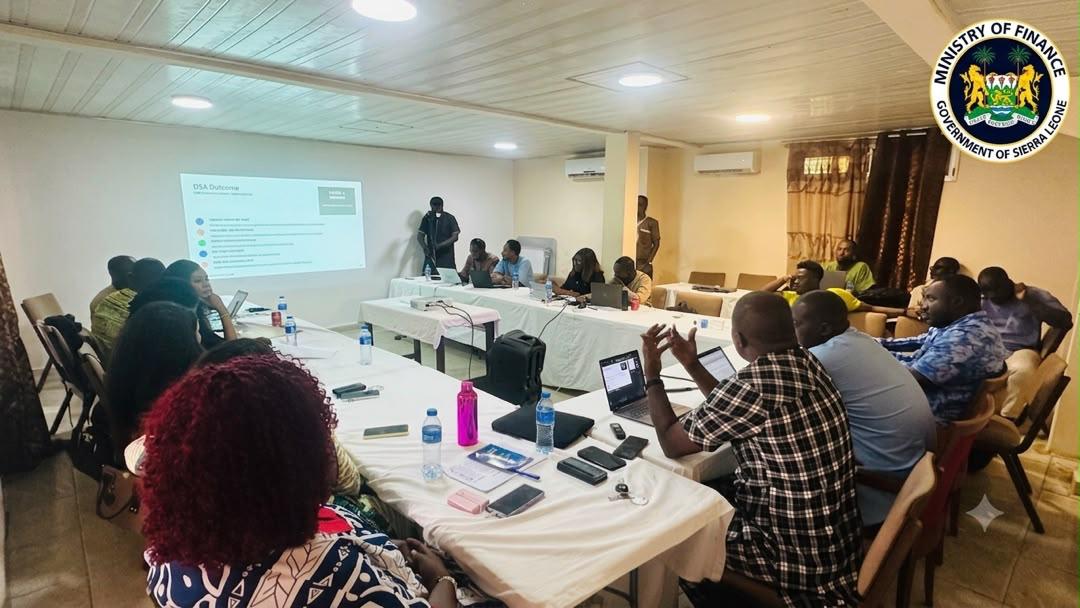
The Ministry of Finance has concluded a two-week technical workshop to update Sierra Leone’s Debt Sustainability Analysis and Medium-Term Debt Strategy, with officials warning that prudent borrowing and stronger revenue mobilization are critical to maintaining fiscal stability.
The engagement, held at Leisure Lodge in Aberdeen, ended on Friday, July 24, 2026. It was organized by the Public Debt Management Division and brought together the Bank of Sierra Leone, Statistics Sierra Leone, the National Revenue Authority, the Ministry of Planning and Economic Development, the Accountant General’s Department, Civil Society Organizations, and Ministry of Finance staff.
Deputy Director of Public Debt, Santigie Charles Conteh, told participants that the latest DSA assessment shows an improvement in the country’s debt-carrying capacity. Sierra Leone has moved from “weak” to “medium,” based on six international indicators used to measure debt sustainability.
“While this is progress, the classification must be sustained for two consecutive DSA cycles before it is officially confirmed,” Conteh said. “Maintaining a medium rating will give us more fiscal space to borrow for development in health, education, roads and other priority areas.”
He cautioned, however, that the gains could be reversed without key reforms. Conteh urged government to increase domestic revenue through technology-driven collection, enforce prudent expenditure, strengthen the Public-Private Partnership framework, and diversify the economy to reduce borrowing dependence.
According to him, the updated DSA and MTDS will guide government borrowing decisions to ensure loans are invested in productive sectors rather than consumed by debt service payments.
National Coordinator of the Budget Advocacy Network, Abu Bakarr Kamara, welcomed the inclusive process involving CSOs and state institutions. He described the DSA and MTDS as essential tools for macroeconomic stability and accountability.
Kamara noted concern over the ratio of debt repayments to domestic revenue, and called for urgent action to reduce tax exemptions, expand digital revenue systems, and improve GST and Customs collections.
Officials said the revised documents will serve as the government’s roadmap for responsible borrowing and fiscal discipline over the medium term, aimed at supporting sustainable economic growth and improved service delivery.
For more information contact Daily Scope Newspaper at dailyscopemedia@gmail.com