By Saidu Jalloh, Daily Scope Reporter
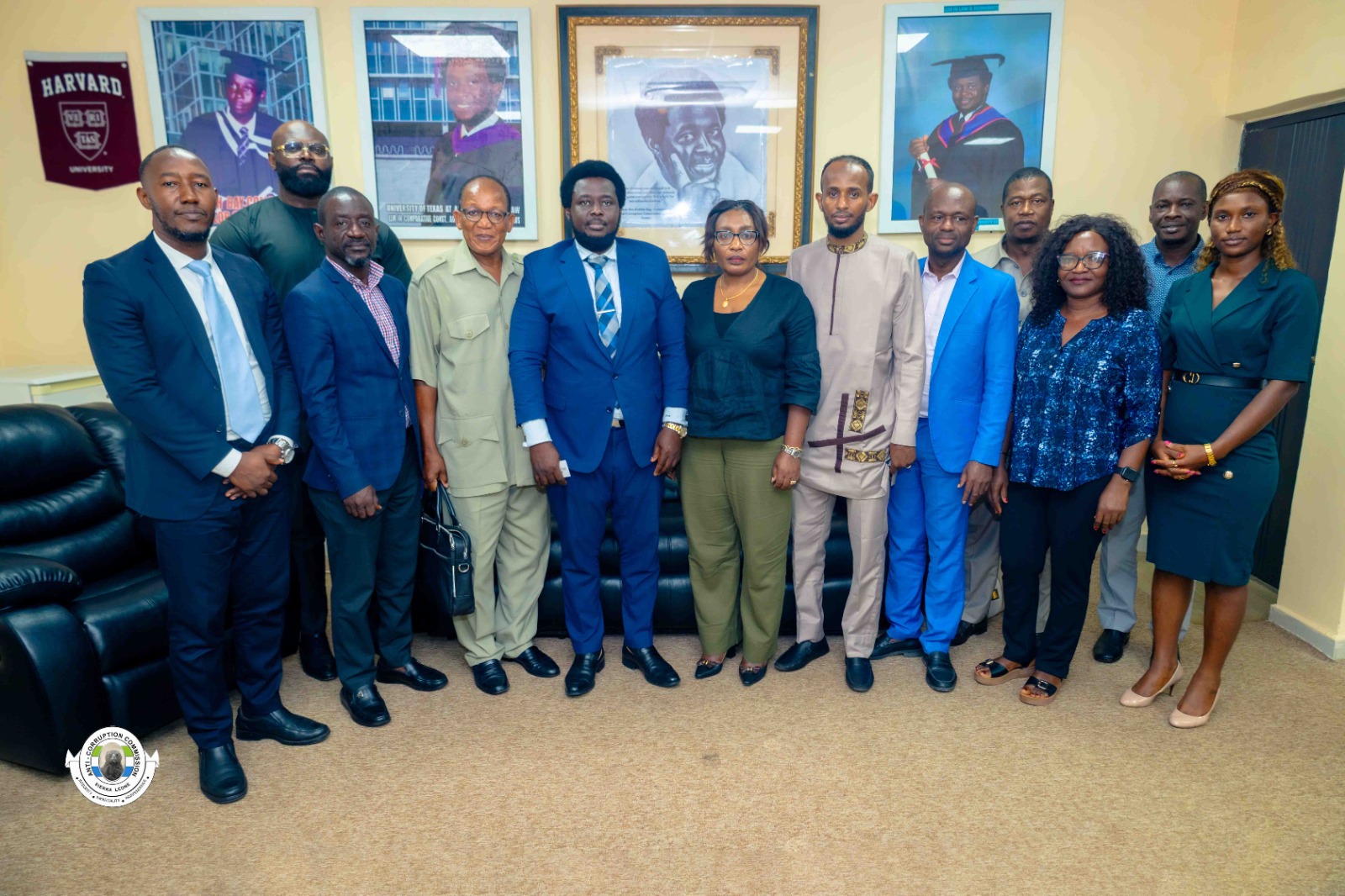
The Anti-Corruption Commission (ACC) of Sierra Leone hosted a delegation from the African Peer Review Mechanism (APRM) on November 27, 2025, to discuss the country’s Second-Generation Country Review Report. This report aims to identify systemic gaps and enhance national development initiatives.
The meeting, held in the Commissioner’s Conference Room at Tower Hill, provided a platform for knowledge exchange and deeper insights into the ACC’s operations. APRM representatives posed questions on various aspects of the ACC’s work, including its legal frameworks, successes, and institutional structures.
Dr. Rachel Mukamunana, the Director of Country Reviews at APRM, explained that the APRM is an African Union initiative promoting good governance and socio-economic development among member states. She noted that Sierra Leone’s recent collaboration with the APRM on the Second-Generation Review Report focuses on critical areas such as institutional performance, transparency, accountability, and democratic governance.
Dr. Mukamunana emphasized the importance of engaging with the ACC to identify existing gaps and gather accurate findings for the report. The APRM delegation was instructed by His Excellency President Dr. Julius Maada Bio to undertake this important review.
The APRM team expressed concerns regarding institutional independence, conviction rates, corruption prevention within the mining sector, and the role of technology in combating corruption.
ACC Commissioner Francis Ben Kaifala Esq. welcomed the delegation and highlighted the productive nature of the discussions. He reflected on the Commission’s past challenges, describing it as a “toothless bulldog” before 2018, but noted that legislative reforms, particularly the Anti-Corruption Act of 2008 and its 2019 amendment, have significantly enhanced the ACC’s capabilities and reputation.
Commissioner Kaifala emphasized that while the ACC operates with limited resources, it prioritizes prevention as a core element of its mandate. Through its Prevention Department, the ACC collaborates with Ministries, Departments, and Agencies (MDAs) to strengthen systems and mitigate corruption risks.
He acknowledged the Commission’s progress but also pointed out ongoing challenges, including inadequate funding, a shortage of vehicles, and the need for further investment in institutional strengthening. The ACC has begun implementing digital tools to streamline operations, such as transitioning the asset declaration process to a digital platform, yet complete implementation remains reliant on additional resources.
In conclusion, Commissioner Ben Kaifala called on the government and development partners to increase investments in the fight against corruption, stressing that sustained progress hinges on adequate support and resources.
For further information, please contact Daily Scope Newspaper at dailyscopemedia@gmail.com