By Saidu Jalloh, D.S
Shell has entered Sierra Leone’s upstream sector after signing a reconnaissance permit with the government to assess the country’s offshore oil and gas prospects, the Petroleum Directorate of Sierra Leone (PDSL) confirmed Wednesday.
The agreement grants the British energy major rights to carry out advanced geological and geophysical surveys across roughly 20,600 square kilometres of offshore acreage. The work programme covers basin modelling and petroleum systems analysis aimed at sharpening the technical picture of Sierra Leone’s deepwater potential and laying groundwork for possible future licensing rounds.
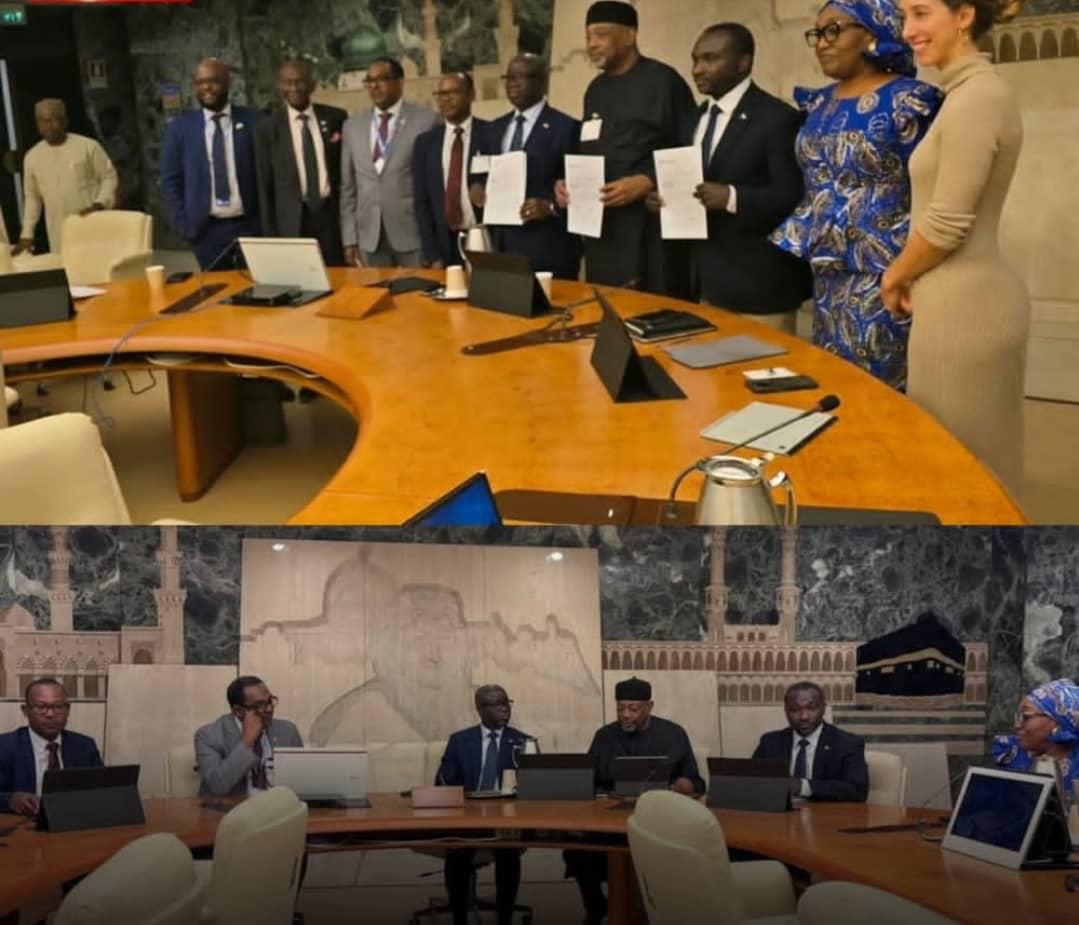
The permit was signed on April 22 in Paris by Thomas Praeger, Shell’s exploration manager for global new entries, and Foday Mansaray, PDSL Director General. It spans 18 exploration blocks, including several in ultra-deep water. Blocks G-114, G-133 and G-112 sit adjacent to five areas awarded to Italy’s Eni in November 2025.
President Julius Maada Bio called the deal a “defining moment” in efforts to develop the country’s natural resources responsibly. “It sends a strong and credible signal to the global investment community that Sierra Leone is open for business, underpinned by transparency, stability, and strong governance,” Bio said.
PDSL Director General Foday Mansaray said the government’s approach centers on de-risking the basin with high-quality data to draw reputable international firms and move closer to exploration drilling.
A Shell spokesperson noted the company regularly signs non-binding agreements with governments to access data and evaluate opportunities, adding that the pact does not represent a commitment to proceed. “Any future steps would be subject to internal governance, regulatory processes and due diligence,” the spokesperson said.
Sierra Leone has no current oil or gas production but is seeking to position itself as West Africa’s next exploration frontier, following significant discoveries in Ivory Coast, Ghana and Senegal. The country has a history of eight wells and four non-commercial discoveries since the 1980s, with activity long hampered by the Ebola epidemic, COVID-19, energy transition pressures and deepwater costs.
Government estimates place potential resources at 44 billion barrels of oil, with about half deemed recoverable. The crude is described as light and sweet, similar to Nigeria’s Qua Iboe grade.
The Shell agreement follows Eni’s exploration deal five months ago, signalling rising international interest in Sierra Leone’s hydrocarbon sector.
For more information contact Daily Scope Newspaper at dailyscopemedia@gmail.com