By Kadijatu Bangura, Daily Scope Reporter
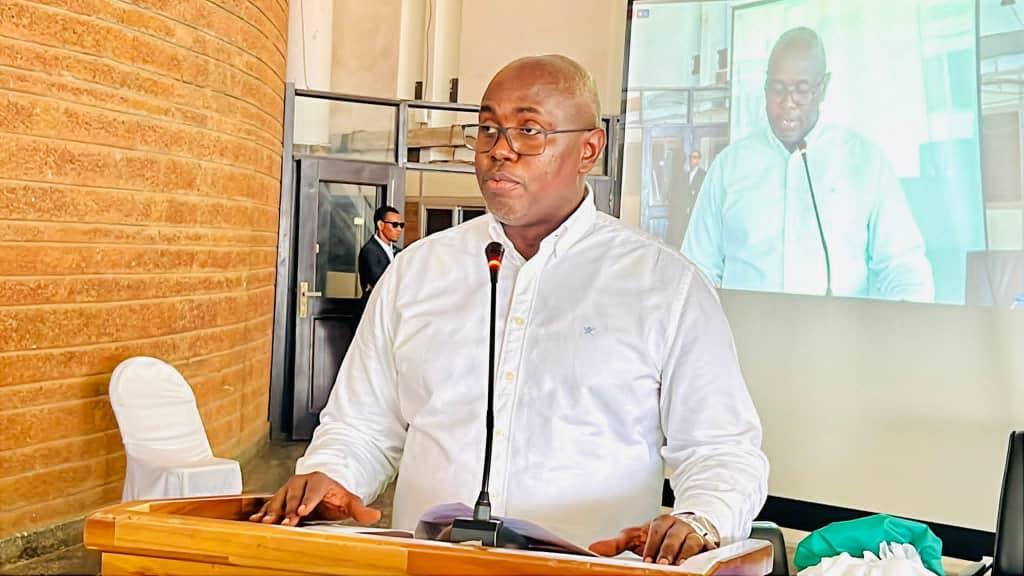
On February 24, 2026, the Rt. Hon. Speaker Segepoh Solomon Thomas attended the NGO-Parliamentary Dialogue, emphasizing its significance in fostering policy coherence aligned with President Julius Maada Bio’s National Priorities. He described the engagement as a vital enhancement of the democratic process, underscoring the collaborative nature of parliamentary work.
Speaker Thomas reiterated that this dialogue promotes mutual transparency and coordination between government institutions and non-governmental organizations (NGOs). He stressed that sustainable national development hinges on institutional coherence, shared accountability, and participatory governance.
As the constitutionally mandated legislative body of the Republic, Parliament is tasked with legislating, representing, and overseeing national affairs. In contrast, NGOs serve as essential development partners by providing services, empowering communities, enhancing accountability, and complementing state functions across various sectors.
Given that both entities operate within the same developmental landscape and constituencies, structured dialogues become not merely beneficial but essential.
He pointed out that Members of Parliament (MPs) are the elected representatives of communities where NGOs implement their projects. It is crucial for MPs to be well-informed about the operational mandates of these organizations within their districts, which in turn enables them to perform their oversight functions effectively, prevents redundancy in efforts, and aligns local development with national legislative priorities.
“Parliament must also ensure that its processes, legislative calendar, committee systems, and oversight mechanisms are accessible and comprehensible to NGO partners,” Speaker Thomas stated. “When NGOs understand how Parliament operates, they can better engage through a collaborative approach.”
He highlighted the need for policy coherence, noting that alignment with national priorities enhances the sustainability and impact of development initiatives. He elaborated on Parliament’s essential role in providing oversight that guarantees accountability, equity, and transparency in resource management.
“Let us utilize this platform to create clear communication channels, outline information-sharing modalities, and encourage periodic engagement between parliamentary committees and pertinent NGOs,” he concluded. “Structured coordination can significantly improve development outcomes and legislative responsiveness.”
For more information, contact Daily Scope Newspaper at dailyscopemedia@gmail.com.