By Kadijatu Bangura, Reporter D.S.
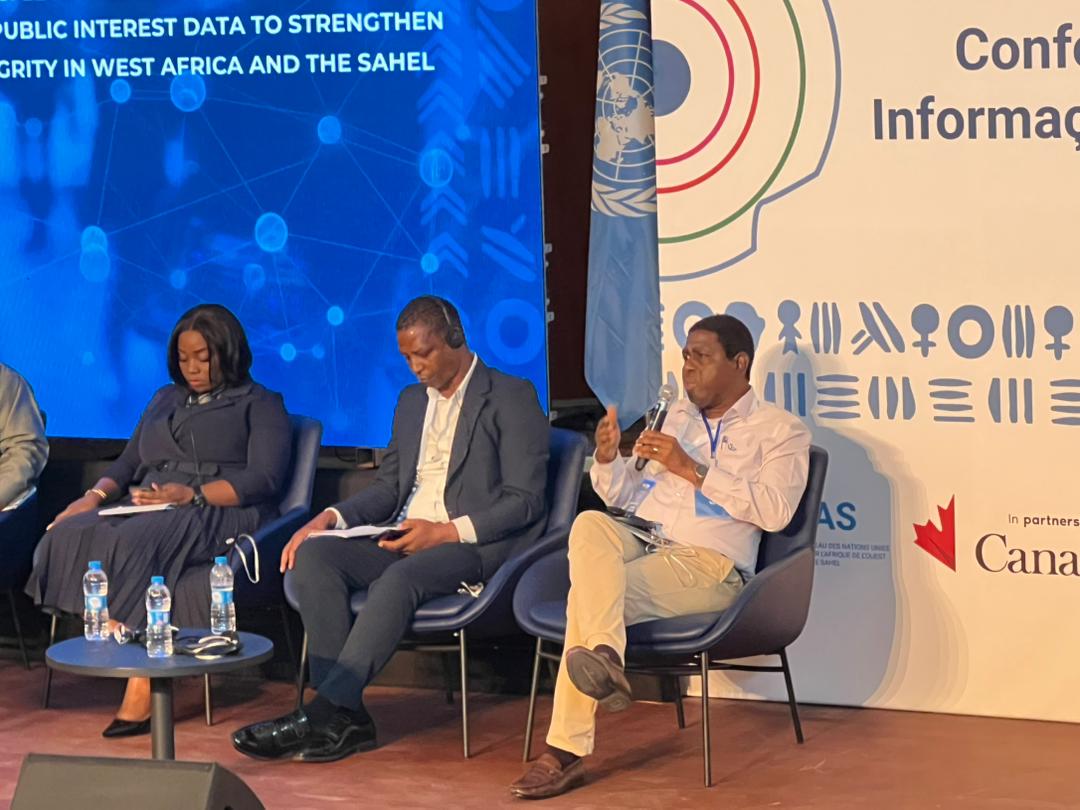
Dr. Ibrahim Seaga Shaw, Chairman and Information Commissioner of the Right to Access Information Commission (RAIC) of Sierra Leone, has called for united efforts to improve access to information and uphold information integrity. His remarks came during the Regional Conference on Information Integrity for West Africa and the Sahel, organized by UNESCO in Praia, Cape Verde, from September 3 to 5, 2025.
Dr. Seaga Shaw participated in a key panel discussion focused on leveraging inclusive access to public interest data to strengthen information integrity across West Africa and the Sahel. His presentation emphasized Sierra Leone’s approach to access to information policy and proactive disclosure.
Highlighting the effectiveness of Sierra Leone’s access to information (ATI) legal framework, Dr. Seaga Shaw noted that the Right to Access Information Act of 2013 and its 2022 regulations empower the RAIC as an autonomous body responsible for enforcing compliance among public authorities. He explained that the legal framework allows the commission to issue orders and impose fines for non-compliance, and is currently under review to enhance enforcement and accessibility.
“The last three years have shown remarkable progress, with a significant rise in information requests—13,016 in 2022, 19,391 in 2023, and 15,000 in 2024—with over 90% processed,” he stated. “This achievement is particularly notable for a small nation like Sierra Leone, especially amidst regional and global improvements in access to information.”
However, Dr. Seaga Shaw also acknowledged the challenges facing the information ecosystem, particularly in light of rapid digital advancements. He expressed concern over media illiteracy, which fosters misinformation and fake news, and the misuse of digital technologies, including deepfakes and AI-generated disinformation.
To combat these issues, he stressed the importance of collaboration among information bodies, governments, civil society, and the media in making public-interest data more accessible and useful. “Information secrecy or delays in access can fuel misinformation. In today’s technological landscape, it is essential to utilize digital tools to expedite access to reliable information,” he urged.
Dr. Seaga Shaw outlined Sierra Leone’s development of a digital infrastructure that streamlines the access to information process. The RAIC now offers electronic versions of request forms, acknowledgment forms, response forms, and complaint forms on its official website, facilitating easier access for citizens.
He advocated for the establishment of robust fact-checking platforms to counteract misinformation and emphasized the need for multilingual access to information, ensuring that requesters can communicate in their preferred languages, including local dialects.
On proactive disclosure, he noted that Sierra Leonean public authorities are legally obligated to disclose specific categories of information without waiting for requests. “Proactive disclosure is critical. Public authorities must either disclose information voluntarily or risk creating a vacuum that can be filled with misleading content,” he advised.
In his concluding remarks, Dr. Seaga Shaw highlighted the importance of the conference as a precursor to the upcoming 17th International Conference of Information Commissioners, set to take place in Freetown, Sierra Leone, in September 2026, focusing on information integrity in the digital era.
The three-day conference concluded with the adoption of a policy framework aimed at enhancing information integrity in West Africa and the Sahel, alongside an action plan for transparent, accountable, and human-rights-based governance.
Dr. Seaga Shaw shared the panel with esteemed figures such as Professor Silvino Evora from the University of Cape Verde, Dr. Vincent Olatunji of Nigeria’s Data Protection Commission, and Mrs. Genevieve Shirley Lartey of Ghana’s Right to Information Commission.
Other members of the Sierra Leone delegation included Emmanuel Abubakarr Turay, Acting Director of Government Information Services, and Millicent Kargbo, President of the Sierra Leone Association of Women in Journalism.
For more information, contact Daily Scope Newspaper at dailyscopemedia@gmail.com.