By Joseph Momoh, Reporter D.S
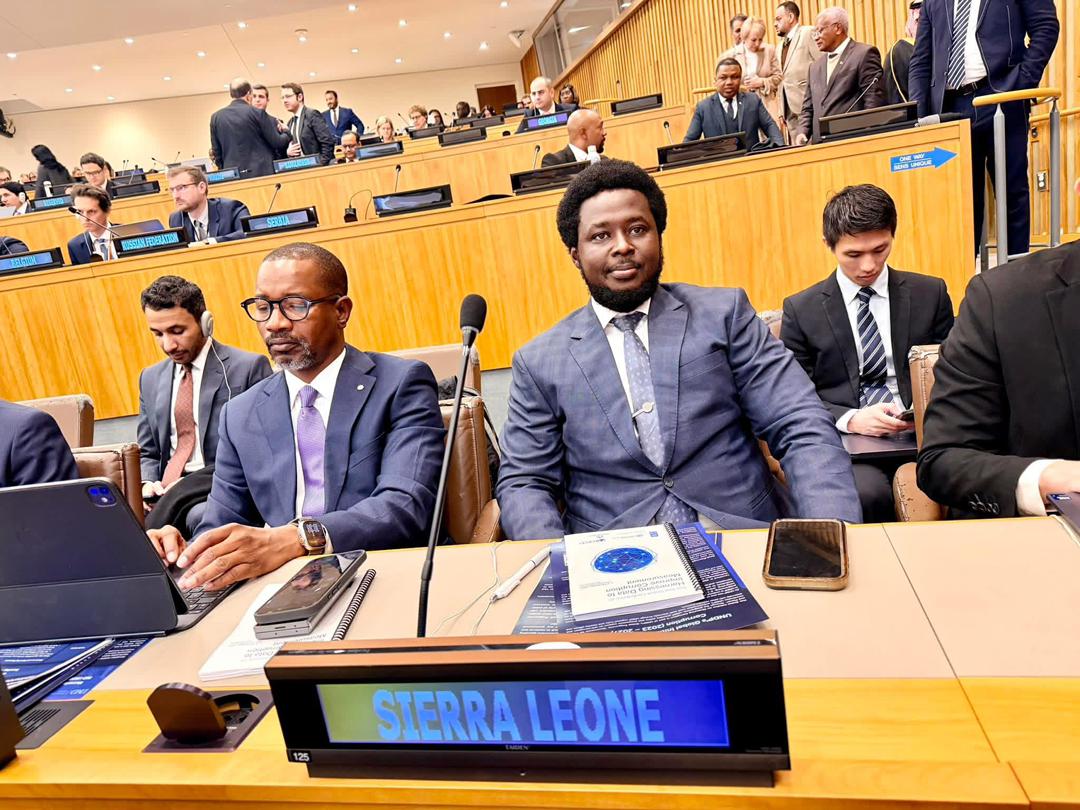
4th December 2025 Francis Ben Kaifala Esq., Commissioner of Sierra Leone’s Anti-Corruption Commission (ACC), emphasized the need for improved tools to measure corruption at the second Global Conference held at the United Nations Headquarters in New York from December 2 to 4, 2025. This conference focused on harnessing data to promote transparency, accountability, and effective policymaking in the global fight against corruption.
In his address, Commissioner Kaifala conveyed greetings from President Julius Maada Bio and the people of Sierra Leone, who are eager to support initiatives aimed at improving measurement methodologies for corruption.
Kaifala pointed out that the annual Corruption Perception Index (CPI) published by Transparency International (TI) has sparked significant debate, particularly in developing nations that often receive low ratings on the index. Drawing from his experience as a former board member of the African Union Advisory Board on Corruption (AUABC) and as president of the Network of Anti-Corruption Institutions in West Africa (NACIWA), he noted that discussions surrounding the CPI frequently evoke strong reactions, ranging from disappointment to indignation.
“It seems that every time the CPI was discussed, the usual response ranged from disapproval to outrage. Many African government representatives and some anti-corruption advocates view the CPI and TI’s accompanying commentaries as part of a targeted smear campaign,” he remarked.
Kaifala argued that the components of the CPI’s formula lack sufficient transparency and do not adequately address critical areas such as tax fraud, money laundering, and illicit financial flows—issues that are central to the anti-corruption movement.
He raised concerns that the CPI can present an “inaccurate and often unjust” portrayal of anti-corruption efforts in Africa. This situation underscores the necessity of the conference, as current tools for measuring corruption have become troubling for Anti-Corruption Agencies (ACAs) and governments alike. The Commissioner highlighted that data derived from desk reviews and anonymous experts can unfairly lower scores for countries actively working to combat corruption.
He advocated for a more effective measurement tool that supports peer review to enable developing nations to learn from successful counterparts. “We can analyze specific country information and data in annual reports to pinpoint areas needing improvement in accountability and transparency,” he suggested.
Kaifala called for a collaborative effort to create a more accurate formula, one that effectively captures the prevalence of corruption without undermining the significant efforts being made to combat it. He stressed the need for a fresh approach, as existing measurement tools are often flawed or biased, even while recognizing the reality of corruption.
The conference was co-convened by the UNDP, the International Anti-Corruption Academy (IACA), the United Nations Office on Drugs and Crime (UNODC), the World Bank, and the Organisation for Economic Cooperation and Development (OECD). It gathered policymakers, government experts, civil society representatives, and members of international organizations.
For further inquiries, please contact Daily Scope Newspaper at dailyscopemedia@gmail.com.