By Joseph Momoh, Reporter, D.S
Sierra Leone’s revised Child Rights Act will not criminalize Female Genital Mutilation for girls under 18 after Parliament struck out the proposed clause during final amendments.
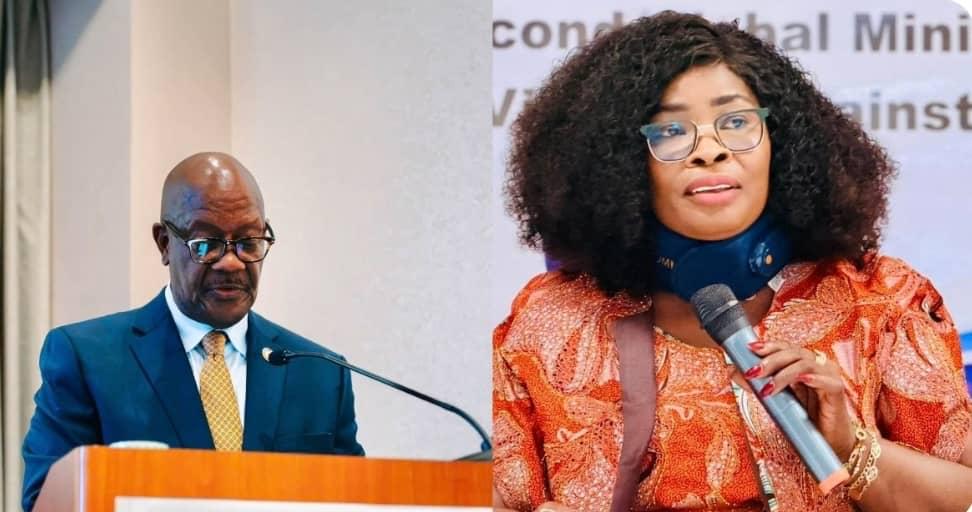
Gender and Children’s Affairs Minister Dr. Isata Mahoi confirmed the development Tuesday at the government’s weekly press briefing at Miatta Civic Centre. She said the ministry championed the provision with full backing from the Executive, including President Julius Maada Bio, as part of broader child protection reforms.
“The removal reflects the political and cultural sensitivities that still surround this issue,” Dr. Mahoi said. “It shows we are not yet fully ready as a nation to directly confront a practice with deep traditional roots.”
The Minister described FGM as a harmful cultural practice with wide-ranging consequences. She linked it to early and forced marriage in some communities, cited severe physical and psychological health risks, and said it contributes to girls dropping out of school while reinforcing gender inequality.
While acknowledging the cultural significance of traditional rites, Dr. Mahoi stressed that customs must evolve to protect children’s rights and wellbeing. “Culture evolves. Our responsibility is to ensure that evolution safeguards children,” she said.
Despite the legislative setback, the Minister said government has not abandoned efforts to protect girls. She disclosed that authorities are awaiting judicial interpretation of existing Child Rights provisions to clarify how child protection measures can still be enforced against FGM involving minors. The court’s decision is expected to guide the next phase of policy and interventions.
“How do we protect our children without abandoning our traditional values?” Dr. Mahoi asked, calling for a balanced national dialogue.
FGM remains a contentious issue in Sierra Leone, where it is closely tied to initiation societies, particularly the Bondo society. UNICEF and UNFPA data consistently rank the country among those with the highest FGM prevalence globally, though recent advocacy and awareness efforts have contributed to gradual shifts in public perception.
With no specific law in place for now, government says it is focusing on non-legislative interventions. These include community sensitization programmes, engagement with traditional leaders and Soweis, promotion of alternative rites of passage, and implementation of the National Strategy for the Reduction of FGM 2025–2030.
For more information contact Daily Scope Newspaper at dailyscopemedia@gmail.com