By Kadijatu Bangura, Daily Scope
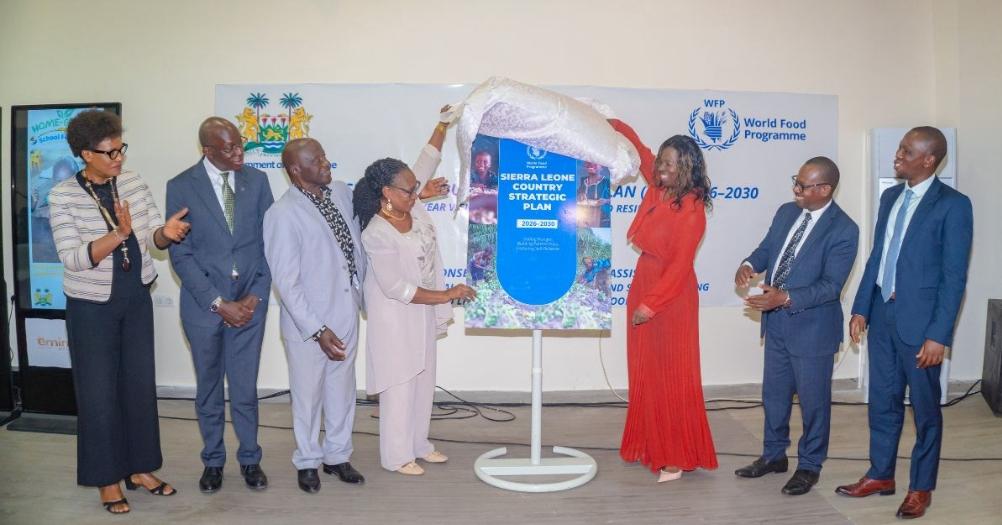
Freetown, April 19, 2026 The government and the United Nations World Food Programme have launched the WFP Country Strategic Plan 2026–2030, shifting the focus from emergency aid to long-term food system reform, nutrition, and resilience.
Unveiled in Freetown before senior government officials, UN agency heads, development partners, and civil society, the plan aligns with the Medium-Term National Development Plan, the Feed Salone strategy, and the UN Sustainable Development Cooperation Framework. It outlines three core outcomes: stronger shock preparedness and response; wider access to safe, diverse, and locally produced nutritious food, particularly for schoolchildren and vulnerable groups; and resilient livelihoods backed by stronger local value chains.
Home-grown school feeding anchors the strategy, linking classrooms to farms by sourcing meals from local producers. The approach aims to improve learning while building stable markets for smallholder farmers, with emphasis on women and youth. Deputy Minister of Basic and Senior Secondary Education Emily Gogra said hunger still blocks attendance and concentration under the Free Quality School Education programme, and that consistent school meals are critical to keeping pupils in class.
WFP Country Director Andrew Odero said the plan builds on past lessons and responds to new realities. He noted that while food security indicators have improved, malnutrition remains a serious challenge for children and rural households. Deputy Minister of Agriculture 2 reported that a growing share of school meal supplies now comes from Sierra Leonean farmers. Investments in aggregation centers, rice milling, and value chains are starting to connect producers to structured markets. “These are early but important signs that our food systems are beginning to function more predictably,” officials said.
UN Resident Coordinator Dr. Seraphine Wakana framed the CSP as a move from isolated projects to integrated platforms as Sierra Leone contends with climate shocks, economic pressures, and supply disruptions. “The answer to these overlapping challenges is not isolated projects, but stronger systems,” she said, stressing that national ownership will lead, with the UN in a supporting role.
Minister of Planning and Economic Development Kenyeh Barlay called the CSP a tool for aligning partners and mobilizing smarter financing, but said delivery will be the test. That means farmers reaching markets, children getting nutritious meals consistently, and communities withstanding shocks.
“The new Country Strategic Plan is about changing the trajectory of food security in Sierra Leone,” officials said. “It moves us from short-term response to long-term systems strengthening, linking nutrition, education, agriculture, and livelihoods in a more coherent way.”
The WFP Country Strategic Plan 2026–2030 sets out to build food systems that support learning, livelihoods, and inclusive growth through 2030.
For more information, contact Daily Scope Newspaper at dailyscopemedia@gmail.com