By: Joseph Momoh, Reporter D.S.
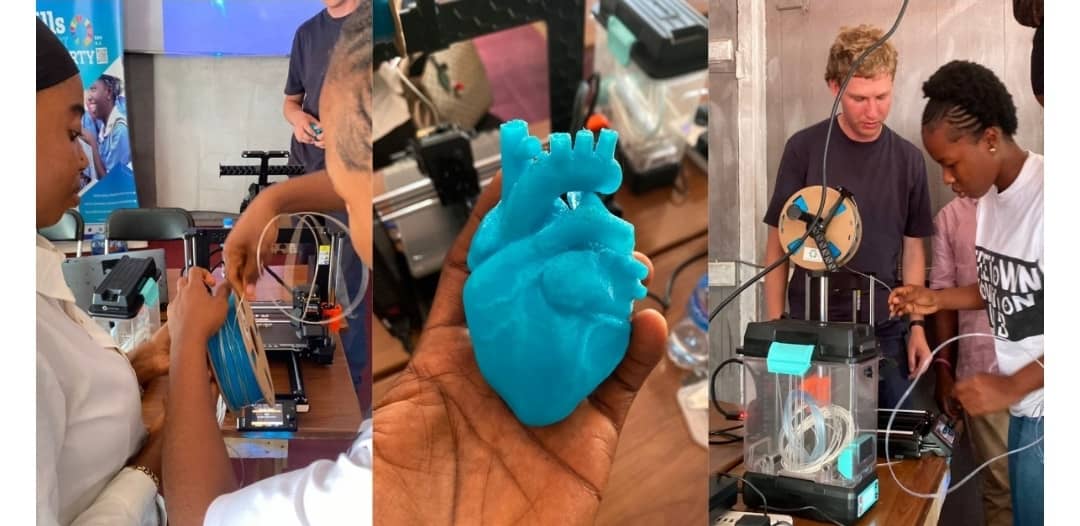
In a significant step towards sustainable innovation, Leotech has successfully conducted a pioneering capacity-building workshop titled “The Circular Economy Pathway to Additive Manufacturing (Waste for 3D Printing),” in collaboration with Freetown Innovation Labs and Skills Pool. This workshop marks the first of its kind in Sierra Leone, training eight staff volunteers from the three institutions in practical skills for transforming waste plastic bottles into 3D printing filament, as well as in computer-aided design (CAD), additive manufacturing (3D printing), and business model development within a circular economy framework.
Sierra Leone faces severe challenges related to plastic pollution, with Freetown generating hundreds of tons of plastic waste annually, of which less than 15% is recycled or reused. This has led to environmental issues such as indiscriminate dumping, beach pollution, flooding, and degradation of natural spaces. The workshop aims to turn this problem into an opportunity, transforming waste into value through innovative technology. “This wasn’t just a training; it was a journey from waste to value,” stated Alfred Mbayoh, CEO of Leotech, during the opening session. “We are tackling plastic pollution while building a sustainable local supply chain for 3D printing filament, something that’s long overdue in Sierra Leone.”
Additive manufacturing, more commonly known as 3D printing, is a cutting-edge technology that allows for the rapid transformation of digital designs into tangible products. Despite its global significance, the adoption of this technology in Sierra Leone has been limited, primarily due to high import costs for 3D printing filaments and a lack of local expertise. The workshop was led by Danish design engineer Rasmus Emil Tofthoj, who shared his extensive knowledge in product design and additive manufacturing. Leotech provided the training facility and local CAD experts, while Freetown Innovation Labs and Skills Pool contributed business development expertise and hands-on training in converting plastic waste into usable filament.
Mohamed Kamara, Managing Director of Freetown Innovation Labs, instructed participants on building viable business models around recycled plastic products. Shamsu Koroma, representing Skills Pool, demonstrated practical methods for processing waste plastic into filament, a critical component of 3D printing technology.
Participants left the program with enhanced skills in sustainable product development and a renewed commitment to advancing local innovation. The workshop underscored how the circular economy can empower youth, reduce environmental waste, and stimulate entrepreneurship. The consortium behind this initiative plans to scale up the project and is actively seeking partnerships and support from government bodies, private sector players, and development organizations. “This is just the beginning,” said Mbayoh. “We’re not only reducing plastic waste but also laying the groundwork for a new generation of local innovators who can compete globally using sustainable technologies.”
For more information, please contact Daily Scope Newspaper at dailyscopemedia@gmail.com.