By Kadijatu Bangura, Reporter, Daily Scope
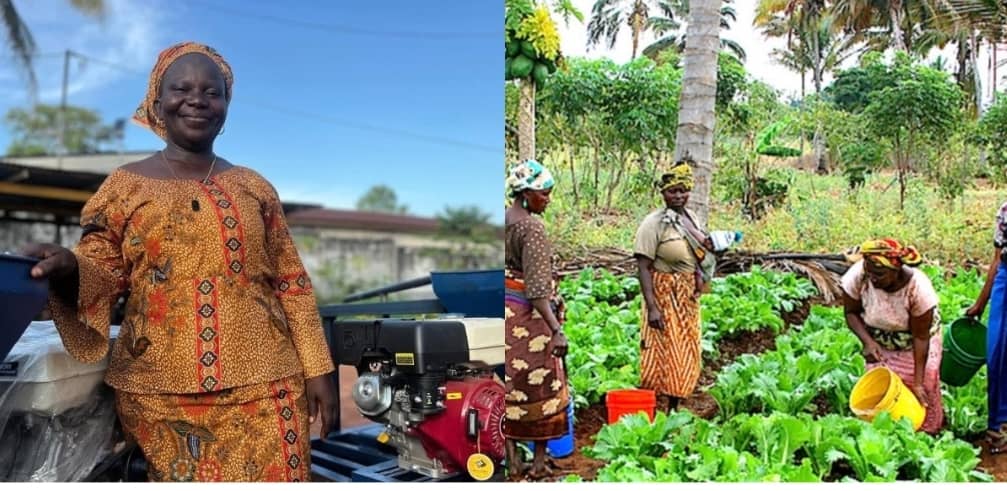
In a significant development for agricultural advancement, more than 200 women farmers across three districts in Sierra Leone have been equipped with essential agro-processing machines. This initiative aims to enhance food production and empower local economies.
The distribution, part of the ‘Resilient Food and Nutrition Security (RFaNS)’ Programme supported by The Church of Jesus Christ of Latter-day Saints and executed by Solidaridad West Africa, includes various equipment such as grinders, dryers, rice mills, gari processing machines, and blenders.
The beneficiaries, organized into 75 groups in Bo, Kenema, and Moyamba Districts, have previously engaged in cultivating crops like cassava, orange-fleshed sweet potatoes, rice, and various vegetables. The newly provided machinery is intended to increase agricultural productivity, minimize post-harvest losses, enhance packaging, and elevate the value of locally grown produce, thereby boosting household incomes and improving market accessibility.
Andrew Kojo Morrison, the Country Representative of Solidaridad in Sierra Leone, highlighted the RFaNS Programme’s aim to bolster the productivity and sustainability of smallholder farmers. He noted that this initiative builds on prior successes, strengthening market connections and improving access to agricultural inputs.
“This partnership with The Church of Jesus Christ of Latter-day Saints has transformed the lives of women farmers in Sierra Leone,” Morrison stated. “Through our farm-to-nutrition approach, mothers can now utilize locally grown crops to prepare nutritious meals, significantly reducing malnutrition among vulnerable populations, particularly pregnant and lactating women.”
In addition to empowering women economically, the initiative promotes overall nutrition and food security in rural communities. With the programme’s support, over 2,000 smallholder women have also received improved seeds, fertilizers, organic pesticides, and ongoing technical assistance.
Before receiving the agro-processing machines, participants underwent rigorous training, facilitated in collaboration with the Ministry of Agriculture and Food Security (MAFS) in Bo. This training addressed challenges such as post-harvest losses and inadequate access to modern processing technologies through hands-on lessons on operating and maintaining the equipment.
Aminata Bah, one of the trainers, emphasized that modern processing and packaging tools could significantly reduce post-harvest losses and enhance product quality, thereby expanding market opportunities for farmers. “Strengthening local value chains will improve the production capacity of smallholder farmers,” Bah remarked.
Engineer Nabieu Kamara from MAFS added that the training equipped participants with essential skills in maintaining cassava and rice processing machines, preparing them to troubleshoot and manage basic maintenance effectively. “This support will boost productivity while addressing the limitations of traditional processing methods,” Kamara explained.
The RFaNS Programme aligns with the national government’s strategy for food security as outlined in the Feed Salone Programme. Momoh Kamara, the District Monitoring and Evaluation Officer at MAFS in Bo, emphasized the initiative’s potential to enhance local food production and strengthen market linkages.
Isatu Sesay, Coordinator for the National Federation of Farmers in Sierra Leone in Bo District, expressed her appreciation for the support, stating that the provision of agro-processing equipment would alleviate longstanding challenges in product processing and packaging. “This equipment will enhance our production capabilities and open doors to new markets,” Sesay affirmed.
The distribution of agro-processing machines is set to have a profound impact—not only on agricultural productivity but also by empowering rural women, fostering economic growth, and advancing food security in Sierra Leone.
For further inquiries, please contact Daily Scope Newspaper at dailyscopemedia@gmail.com.